Telling them apart
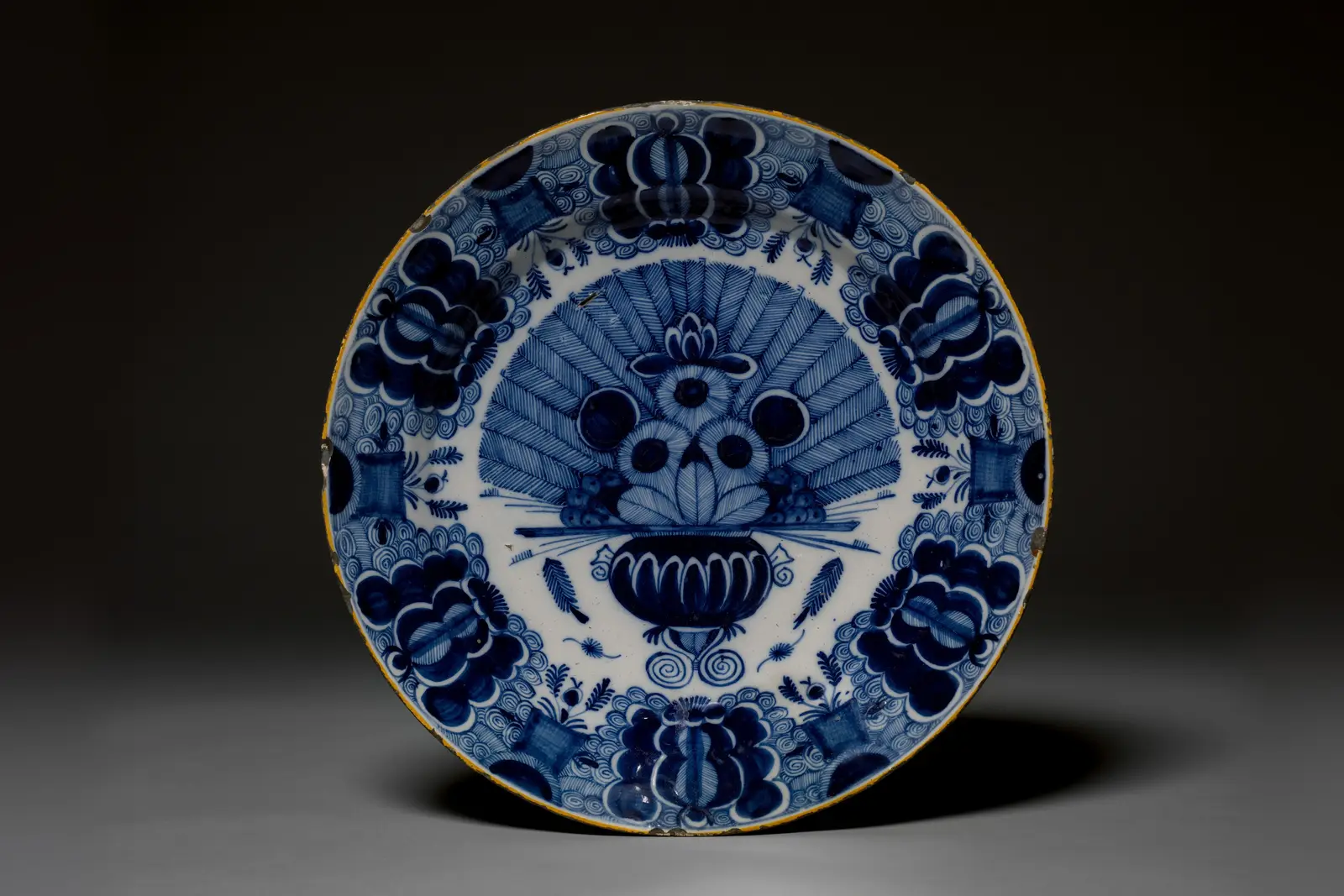
Delftware: Opaque Tin White Over a Porous Clay Body
Delftware is tin-glazed earthenware, not porcelain: an opaque white enamel, made white by tin, laid over a porous clay body, as Barber's 1907 handbook explains.
Catalogued
Picture credit
"Plate, probably De Porceleyne Claeuw Factory (card)" by Cleveland Museum of Art — https://www.clevelandart.org/art/1969.254 — CC0 1.0 (https://creativecommons.org/publicdomain/zero/1.0/); modified: padded with the photograph's own background to a 3:2 frame, left and right, with a feathered seam