Object reading
Venus de Milo: Joined at the Hips, per the Louvre's Record
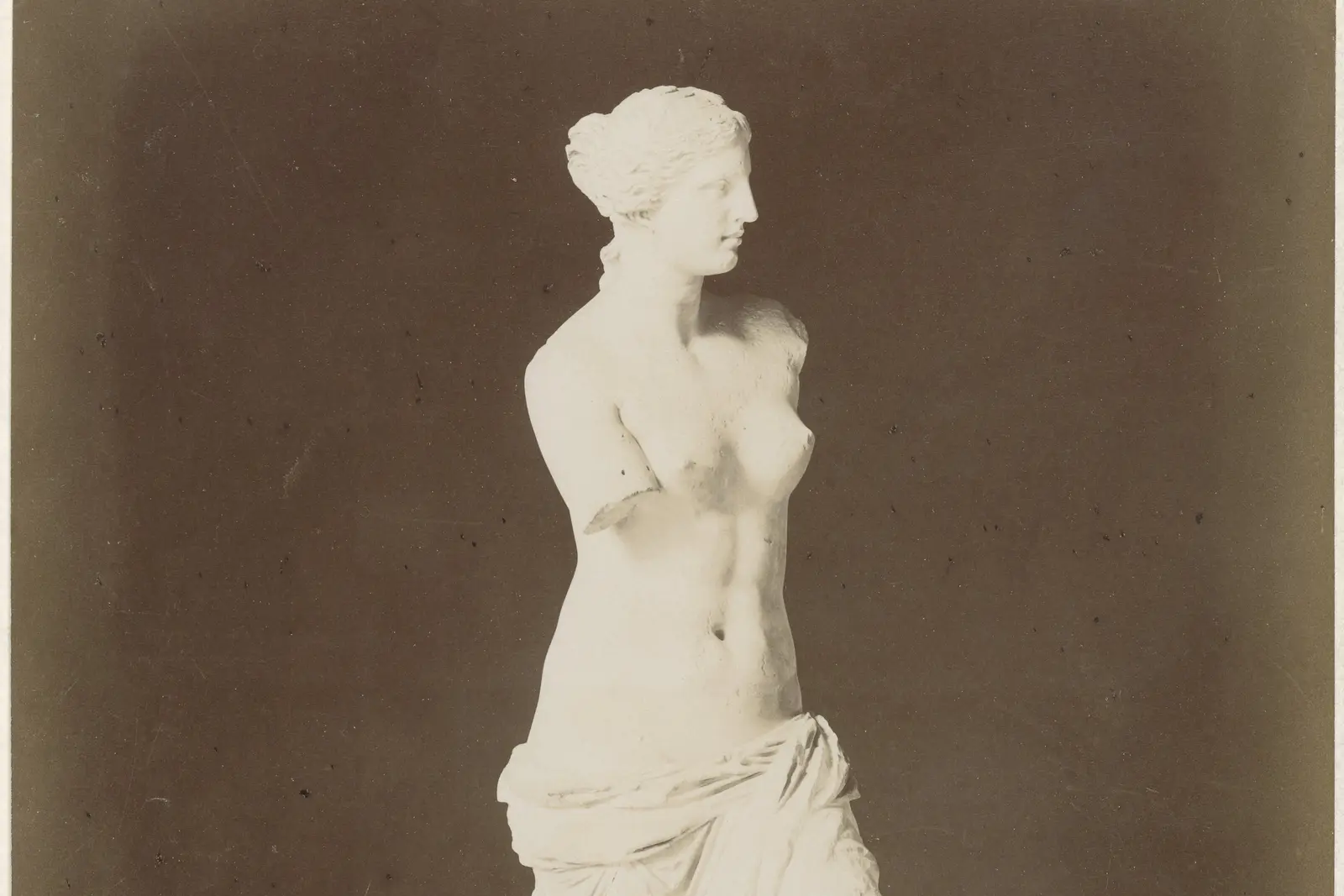
The Louvre's record says the Venus de Milo is two marble elements joined at the hips, and an 1878 study says the drapery hides the seam. Here is where to look.
Catalogued
Picture credit
"Venus van Milo, Louvre. Musée du Louvre. - La Vénus de Milo" by Rijksmuseum — https://commons.wikimedia.org/wiki/File:Venus_van_Milo,_Louvre_Mus%C3%A9e_du_Louvre._-_La_V%C3%A9nus_de_Milo_(titel_op_object),_RP-F-F16588.jpg — CC0 1.0 (http://creativecommons.org/publicdomain/zero/1.0/deed.en); modified: cropped to a 3:2 frame from the top of the head to the hip line, with the printed caption line left out