Object reading
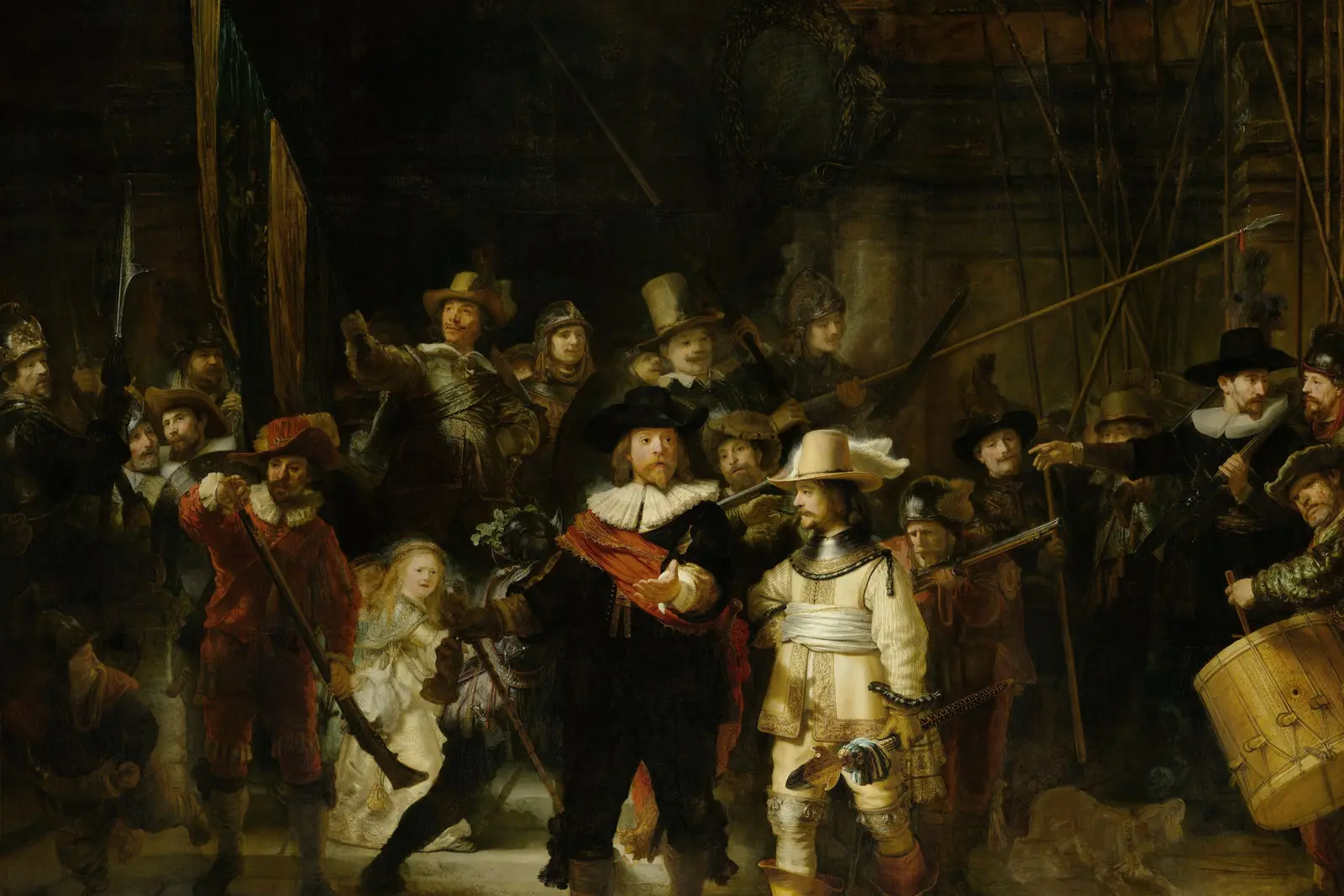
The Night Watch: How Much of the Canvas Was Cut in 1715
Per the Rijksmuseum, The Night Watch was cut on all four sides in 1715, widest on the left. The strips, the published sizes and a copy page that says three.
Catalogued
Picture credit
"The Night Watch (card)" by Rembrandt van Rijn — https://commons.wikimedia.org/wiki/File:The_Nightwatch_by_Rembrandt_-_Rijksmuseum.jpg — Public domain (US: published before 1931; DE/FR: Rembrandt died in 1669 per the Commons creator template on the file page, more than 70 years ago; faithful reproduction of a two-dimensional work); modified: cropped to a 3:2 frame from the centre (full width, 14168 by 9445 pixels) and reduced to 2400 by 1600 pixels