Boulle Marquetry: Two Panels From One Cut, per Roubo
Short answer
According to Roubo's 1774 manual on cabinetmaking, brass and tortoiseshell marquetry of the kind linked with André-Charles Boulle was cut from two sheets laid one over the other, so one cutting gave two matching pieces with the materials swapped scanned page. On Roubo's Pl. 336, near the end of this page, compare Fig. 7 and Fig. 8.
Technique sheet
- Technique
- Boulle marquetry (partie and contre-partie): Boulle known for metal patterns inlaid into tortoiseshell per the Cleveland record; partie and contre-partie are Roubo's terms, and Roubo's p. 1014 does not name Boulle
- Kind of work
- marquetry in brass and tortoiseshell, which Roubo also calls a mosaic in metals
- Principle in one line
- two sheets of different materials cut together, one over the other, give two equally cut pieces at once (per Roubo)
- What to look for
- partie: tortoiseshell ground with brass ornament (according to Roubo)contre-partie: brass ground with tortoiseshell ornament (according to Roubo)
- Usual period and place
- France, late 17th Century, per the Cleveland record for 1949.539described in print in 1774 (according to Roubo)
- Example in a collection
- Cabinet, c. 1690, by André-Charles Boulle, ebony, marquetry in metal and tortoise shell, as published
This record as CSV (boulle-marquetry-technique.csv) (notes on this file)
Data: Cleveland Museum of Art, 1949.539 collection record (CC0); André-Jacob Roubo, L'Art du menuisier ébéniste (1774), p. 1014, paraphrased with the page number
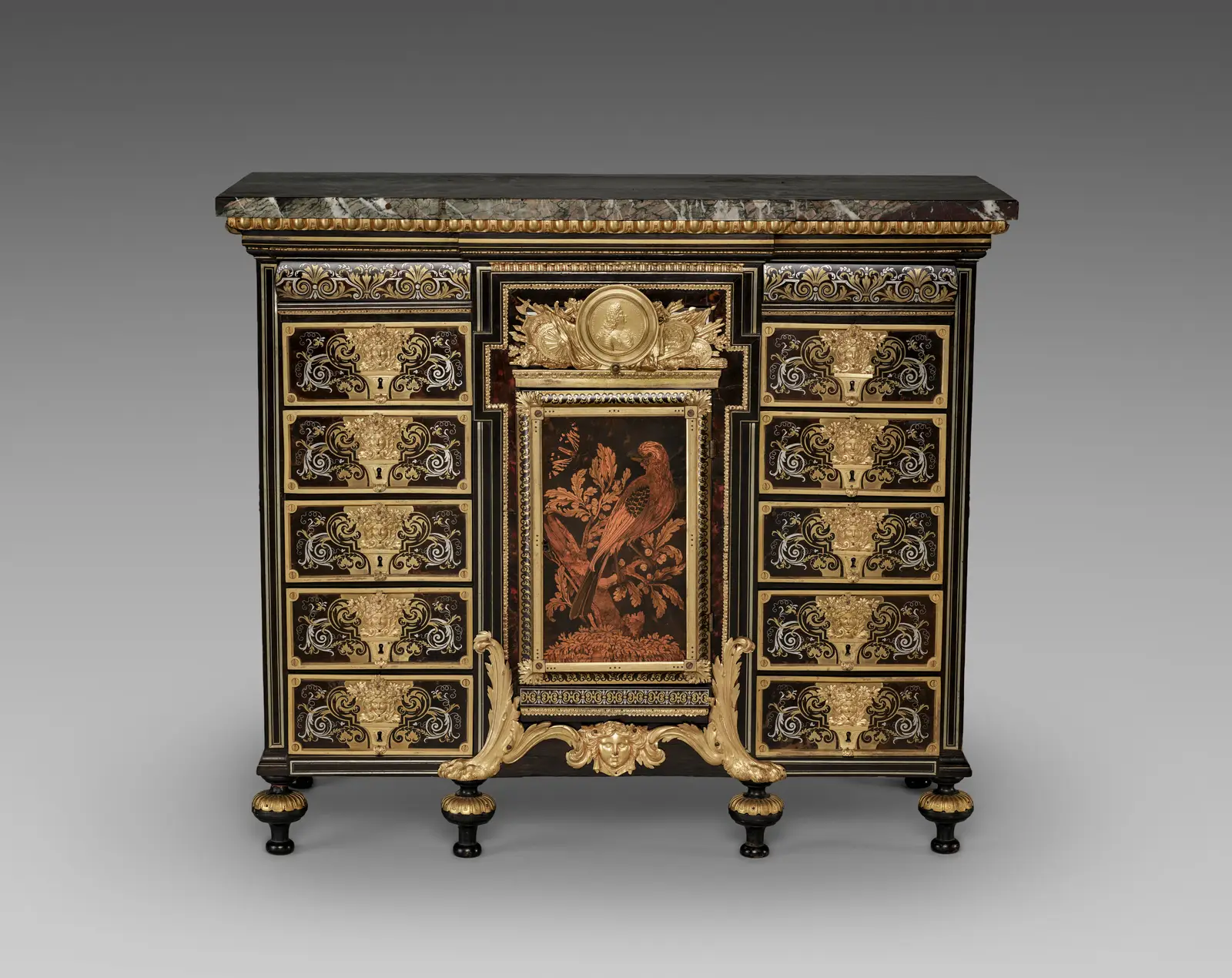
Cabinet, c. 1690, by André-Charles Boulle, in the Cleveland Museum of Art. The record lists ebony and marquetry in metal and tortoise shell, and notes a medallion of Louis XIV within the bronze decoration.
Collection: Cleveland Museum of Art, 1949.539
"Cabinet, André-Charles Boulle" by Cleveland Museum of Art — https://www.clevelandart.org/art/1949.539 — CC0 1.0 (https://creativecommons.org/publicdomain/zero/1.0/)
Card and share picture, a 3:2 copy of this object’s photograph: "Cabinet, André-Charles Boulle (card)" by Cleveland Museum of Art — https://www.clevelandart.org/art/1949.539 — CC0 1.0 (https://creativecommons.org/publicdomain/zero/1.0/); modified: cropped to a 3:2 frame from the centre (full width, 216 px removed at the top and at the bottom) and resized to 2400 x 1600
Two panels can share one pattern: brass in tortoiseshell on one, tortoiseshell in brass on the other. According to Roubo, a brass sheet and a tortoiseshell sheet were cut together, and each one then held the ornaments that fit the other's empty spaces. Look for the pair on his engraved plate further down, where Fig. 7 and Fig. 8 sit next to each other. scanned page
Roubo gave the two pieces separate names: the one with a tortoiseshell ground and brass ornament is la partie, the main piece; the one with a brass ground and tortoiseshell ornament is the contre-partie, the counterpart. Those paired, reversed patterns are what this site calls the maker's tell: a trace on an object that shows how it was made, counted here because Roubo names both pieces and states their cause.
What does Boulle work look like?
The Cleveland Museum of Art holds a cabinet of about 1690 by André-Charles Boulle (1642–1732), who, according to the museum's record, was appointed cabinetmaker to King Louis XIV in 1672. The record lists its materials as “ebony, marquetry in metal and tortoise shell”. It describes Boulle as known for “marquetry, in which metal patterns are inlaid into tortoiseshell then applied within the veneered surface of the furniture”. full text
In Roubo's vocabulary, a tortoiseshell ground carrying metal ornament is the arrangement he calls la partie. That is this page's matching of terms: the Cleveland record does not use Roubo's words, and it does not say whether each panel of this cabinet is a partie or a contre-partie. Roubo's page on the method does not name Boulle either.
The record also points to one motif by place, “the parrot on the central panel of this chest”. It adds a piece of later history. “Originally designed to sit atop an elaborate tall stand,” the record says, the chest was “likely altered in the late 1700s to reduce its scale and height”, and the qualifying word likely is the museum's own.
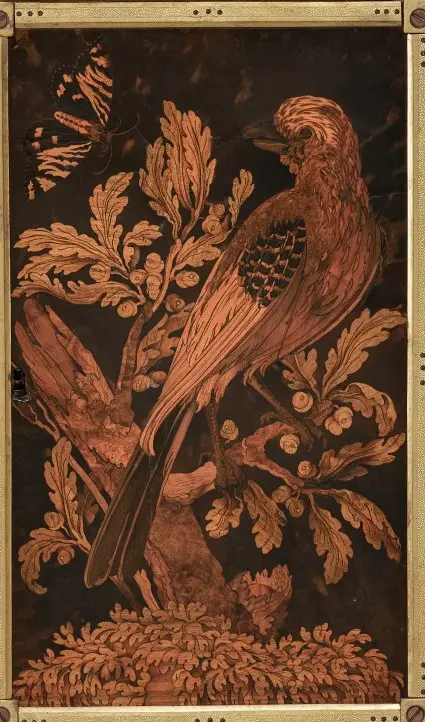
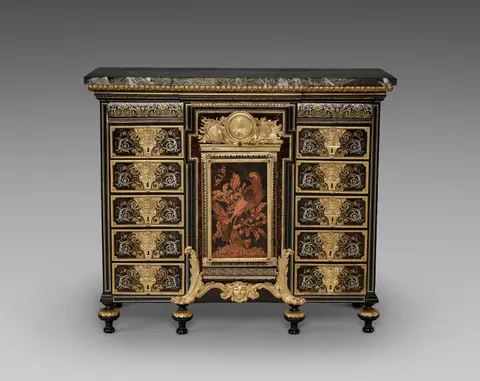
The central panel of the cabinet, where the Cleveland record names a parrot among the inlaid motifs.
Collection: Cleveland Museum of Art, 1949.539
Detail. The small picture marks where it sits in the whole object.
"Cabinet, André-Charles Boulle, central panel (detail)" by Cleveland Museum of Art — https://www.clevelandart.org/art/1949.539 — CC0 1.0 (https://creativecommons.org/publicdomain/zero/1.0/); modified: cropped to the detail of the central door panel named in the record (the parrot on the central panel), at the original resolution, 425 x 722 px
The record gives the overall size as 101.3 by 117.6 by 50 cm, and its dimension fields assign those figures to height, width and depth. As it stands now, the cabinet is a little lower than it is wide.
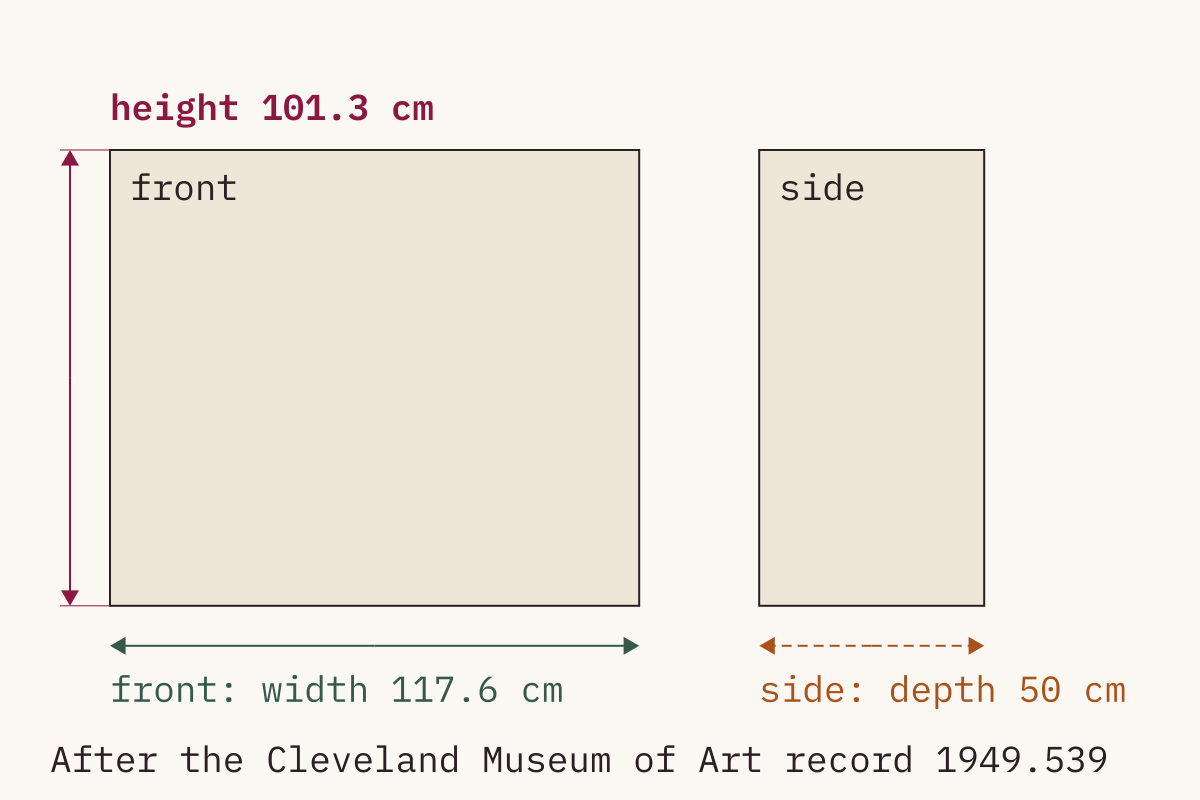
The cabinet's overall measurements from the museum record, with the front and the side drawn to one scale.
Source: Cleveland Museum of Art, collection record for 1949.539 (CC0)
Read the figure as text
- Height: 101.3 cm, as published in the Cleveland record.
- Width, across the front: 117.6 cm, as published.
- Depth, front to back: 50 cm, as published.
"Cabinet 1949.539: overall size in centimetres" by Kiln, Easel & Anvil, https://kilneaselandanvil.com/furniture/boulle-marquetry/ — CC BY 4.0, https://creativecommons.org/licenses/by/4.0/
Data: Cleveland Museum of Art, Cabinet, 1949.539, collection record (CC0)
How does one cut make two panels?
André-Jacob Roubo's account opens the fourth section of his chapter XIV, in the part of L’Art du menuisier devoted to the cabinetmaker, the ébéniste. On p. 1014 he explains why the method exists. The materials, even for the plainest work, are “d'une certaine valeur & assez difficiles à mettre en œuvre”, fairly precious and rather difficult to work (translated here, as are the French passages below), so the aim was to save labour and material at the same time. scanned page
The saving came, he writes, “en découpant deux feuilles de matieres différentes (comme du cuivre & de l'écaille) l'une sur l'autre”, that is, by cutting two sheets of different materials, such as brass and tortoiseshell, one over the other. Roubo's word here is cuivre, and on the same page he calls the sheet laiton, brass. scanned page
The result was “deux pieces de Marqueterie également découpées”, two pieces of marquetry cut alike, so that the flowers or ornaments of one could be placed in the empty spaces of the other. “Cette maniere de découper la Marqueterie s'appelle travailler en contre-partie”, Roubo adds: this way of cutting marquetry is called working in counterpart. scanned page
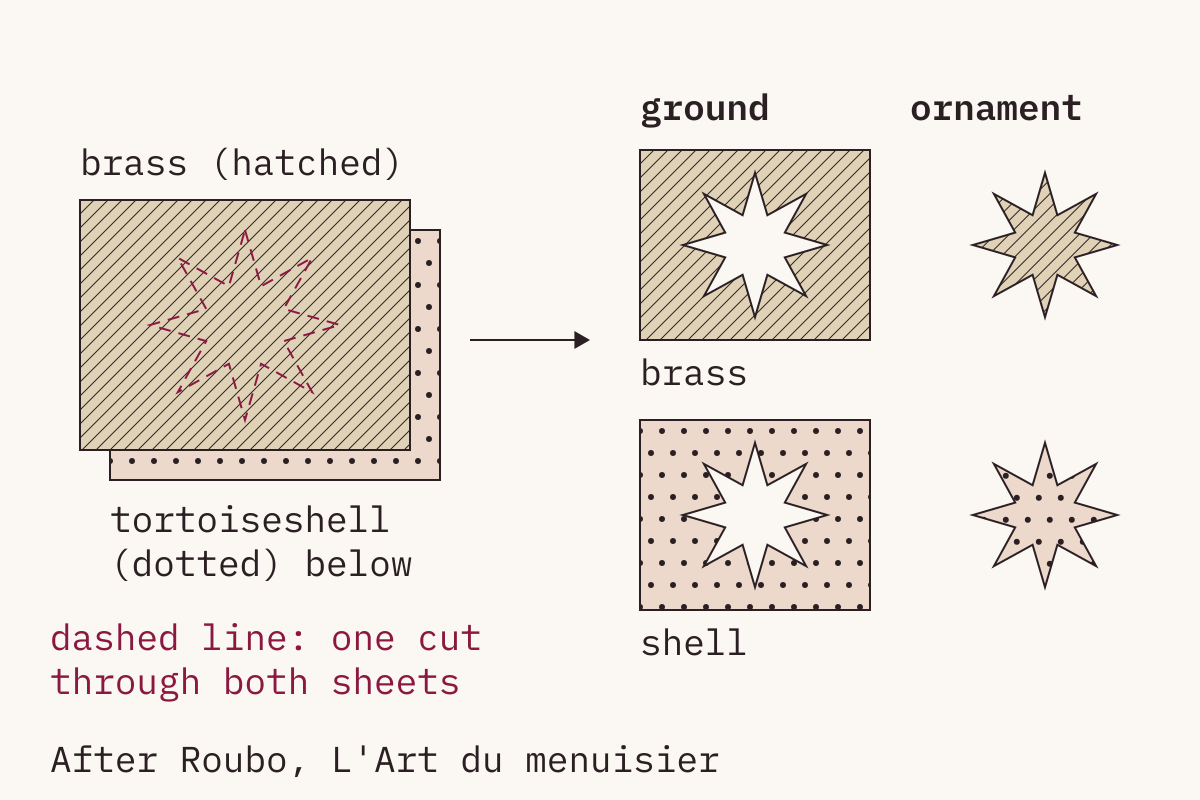 schematic, not to scale
One cutting through two stacked sheets leaves four parts: a brass ground with an empty space, a brass ornament, a tortoiseshell ground with an empty space and a tortoiseshell ornament. Swapping the ornaments gives the two panels.
Source: Roubo, L’Art du menuisier, part III, section III, chapter XIV, p. 1014 (1774)
Read the figure as text
- Before cutting: a brass sheet lies over a tortoiseshell sheet (Roubo's example materials, p. 1014).
- One cut through both sheets follows the outline of the ornament.
- After cutting: each sheet gives a ground with an empty space and an ornament of the same shape.
- The brass ornament fits the tortoiseshell ground, and the tortoiseshell ornament fits the brass ground.
- The eight-pointed motif is the site's own shape, not a pattern from any piece of furniture.
"Two sheets cut together give two grounds and two ornaments" by Kiln, Easel & Anvil, https://kilneaselandanvil.com/furniture/boulle-marquetry/ — CC BY 4.0, https://creativecommons.org/licenses/by/4.0/
Data: André-Jacob Roubo, L'Art du menuisier ébéniste (1774), p. 1014
This page stops at that principle: Roubo continues with the saw, the glue and the separating of the sheets, and none of those working steps is repeated here.
Tortoiseshell appears on this page only as a historical material, and the page gives no advice about it.
Which panel is the partie?
Roubo settles the names in the next paragraph on p. 1014. The marquetry “où l'écaille fait le fond de l'ouvrage, & le cuivre les ornements, est la plus belle, & se nomme la partie”. Where the tortoiseshell forms the ground and the brass the ornaments, it is the finer piece and is called the partie, the piece that was the main object of the work. scanned page
The other, Roubo goes on, “dont le cuivre fait le fond & l'écaille les ornements, se nomme contre-partie”: with a brass ground and tortoiseshell ornaments, it is the counterpart, and in his words “la moins estimée”, the less esteemed. On p. 1017 Roubo adds that the contre-partie could still be put to very good use. scanned page
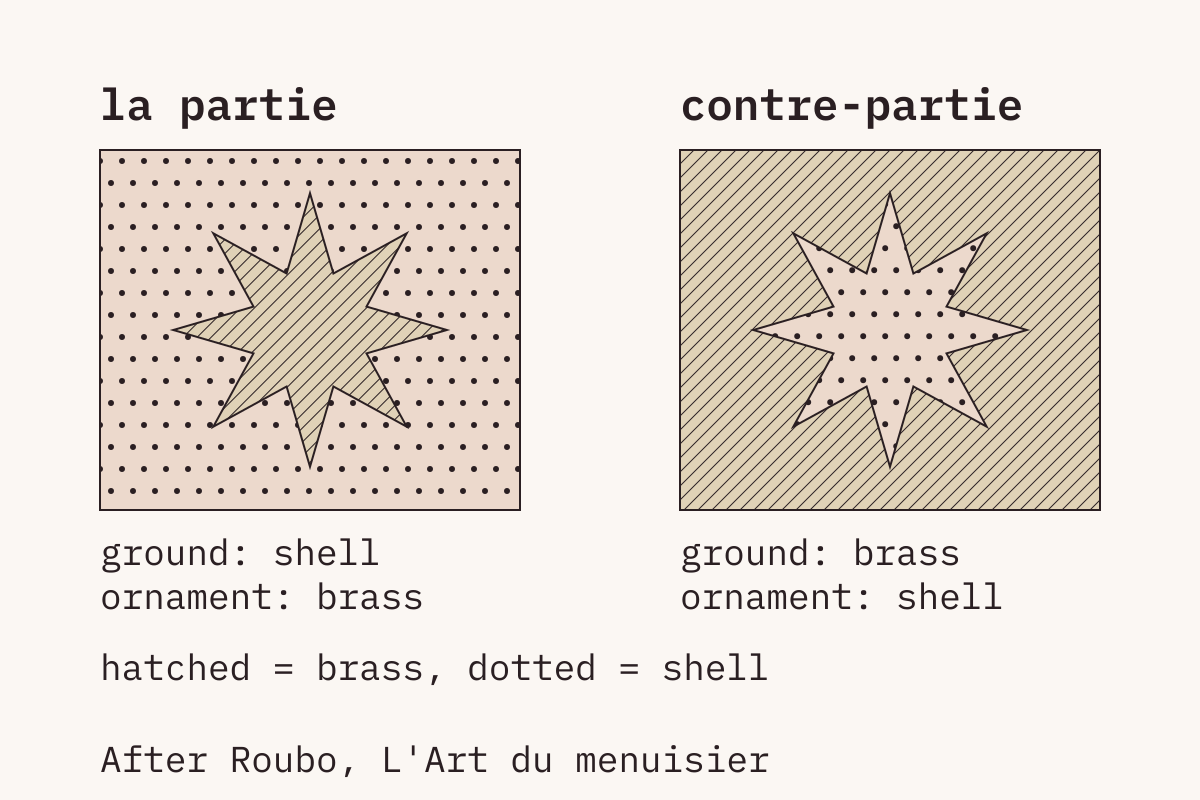 schematic, not to scale
The two panels side by side, named as Roubo names them on p. 1014. Hatching marks brass and dots mark tortoiseshell; the tints are indicative only and are not the colours of the materials.
Source: Roubo, L’Art du menuisier, part III, section III, chapter XIV, p. 1014 (1774)
Read the figure as text
- La partie: tortoiseshell ground, brass ornament; Roubo calls it “la plus belle”, the finer (p. 1014).
- Contre-partie: brass ground, tortoiseshell ornament; Roubo calls it “la moins estimée”, the less esteemed (p. 1014).
- In the drawing, hatching marks brass and dots mark tortoiseshell; the star is the site's own motif.
"La partie and contre-partie in Roubo's terms" by Kiln, Easel & Anvil, https://kilneaselandanvil.com/furniture/boulle-marquetry/ — CC BY 4.0, https://creativecommons.org/licenses/by/4.0/
Data: André-Jacob Roubo, L'Art du menuisier ébéniste (1774), pp. 1014 and 1015
Roubo also marks off this metal marquetry from the wood marquetry he describes from p. 866 onward. On p. 1014 he says the two are nearly alike, but the metal kind needs separate treatment because some ways of working differ and because of its materials, brass and tortoiseshell. scanned page
What did Roubo show?
The method is engraved on a plate titled “MANIERE D'EXECUTER la piece de Marqueterie representée dans la Planche précédente”, the way to make the piece of marquetry shown on the preceding plate. It is numbered Pl. 336 and signed “A. J. Roubo Inv. Del. et Sculp.”, as designer, draughtsman and engraver. scanned page
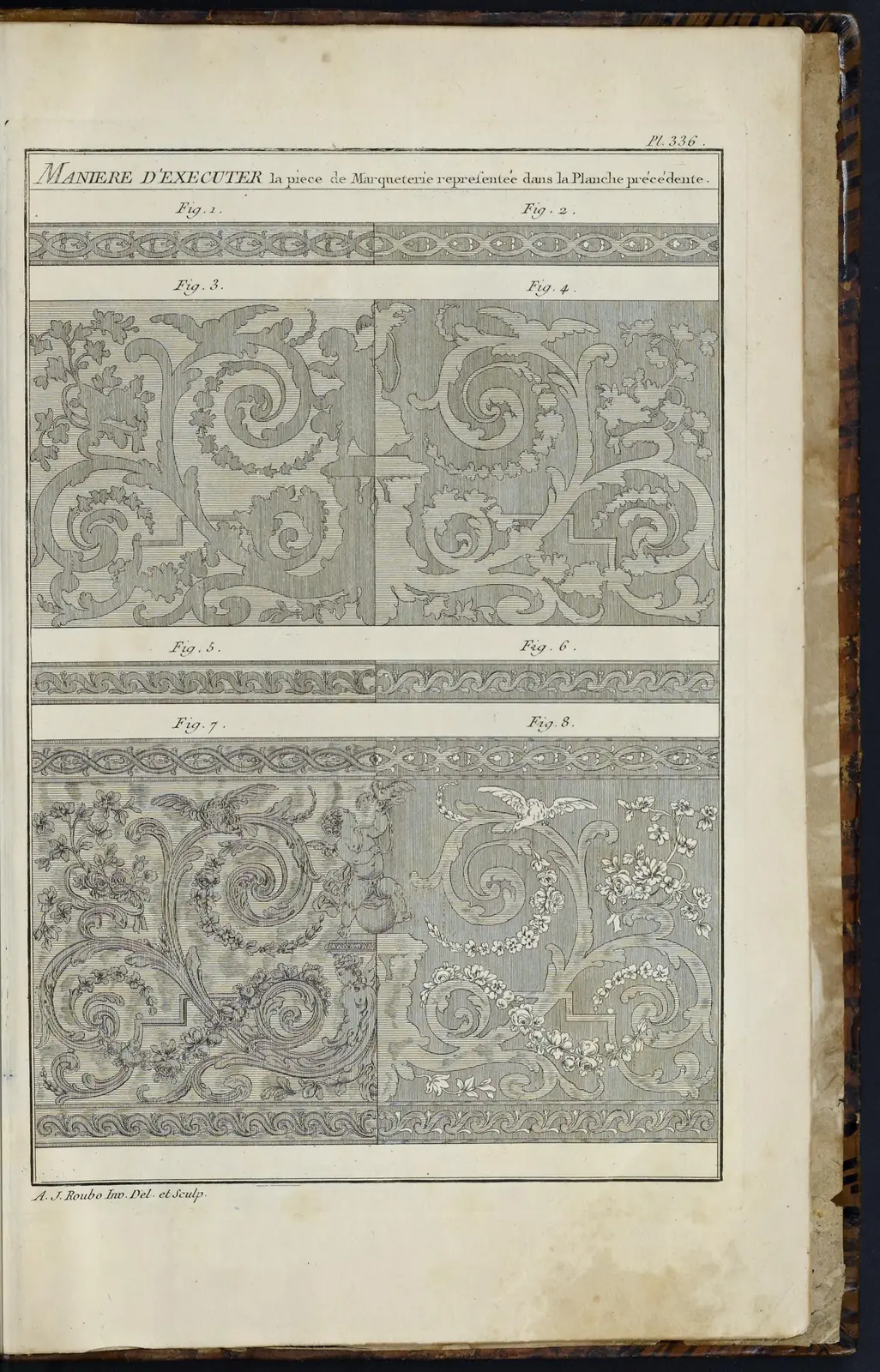
Pl. 336 from the cabinetmaker's part of Roubo's L’Art du menuisier. The text on p. 1015 explains the pairs: Fig. 1, 3 and 5 are parties and Fig. 2, 4 and 6 contre-parties, the ground of the first in tortoiseshell and of the others in brass.
Collection: Getty Research Institute copy, L'Art du menuisier, part III, section III (1774), Pl. 336, scanned for the Internet Archive
"Maniere d'executer la piece de marqueterie, Pl. 336 of L'Art du menuisier (Roubo)" by André-Jacob Roubo — https://archive.org/details/gri_33125009321973 — Public domain (US: published in 1774, before 1931; DE/FR: Roubo, who designed, drew and engraved the plate, died in 1791 per the Getty Research Institute library record of the scan, more than 70 years ago)
The plate reads in pairs, left and right. On p. 1015 Roubo describes Fig. 1, 3 and 5 as “parties” and Fig. 2, 4 and 6 as “contre-parties”, that is, “que le fond des uns est en écaille, & celui des autres en cuivre”: the ground of the first is tortoiseshell and that of the others brass. scanned page
The bottom pair shows the finished state. Fig. 7, according to p. 1017, “représente une partie de Marqueterie toute finie”, a piece of partie marquetry completely finished. Fig. 8 is the contre-partie, and there Roubo notes a difference: because brass forms the ground and tortoiseshell the ornaments, the tortoiseshell is not engraved, “du moins pour l'ordinaire”, at least not as a rule. scanned page
The dates come from the volume itself: on p. 1036, the Académie royale des sciences records on 5 March 1774 its approval of this section, “l'Art du Menuisier-Ebéniste”, by “M. Roubo le fils”. The page closes with the printer's line, Delatour, 1774. scanned page
An earlier part of the same work deals with joints, including the dovetail joint whose tails Roubo puts in the sides of drawers. Other furniture on this site was shaped by other means: a style tied to Thomas Chippendale's 1754 pattern book, Chippendale style, and a chair made by bending wood, the Thonet No. 14. scanned page
Under the loupe: look again at Fig. 8, the counterpart, where Roubo says the tortoiseshell ornament in a brass ground usually goes unengraved, then turn to the Venus de Milo, a marble statue made of two elements joined at the hips, per the Louvre's record.
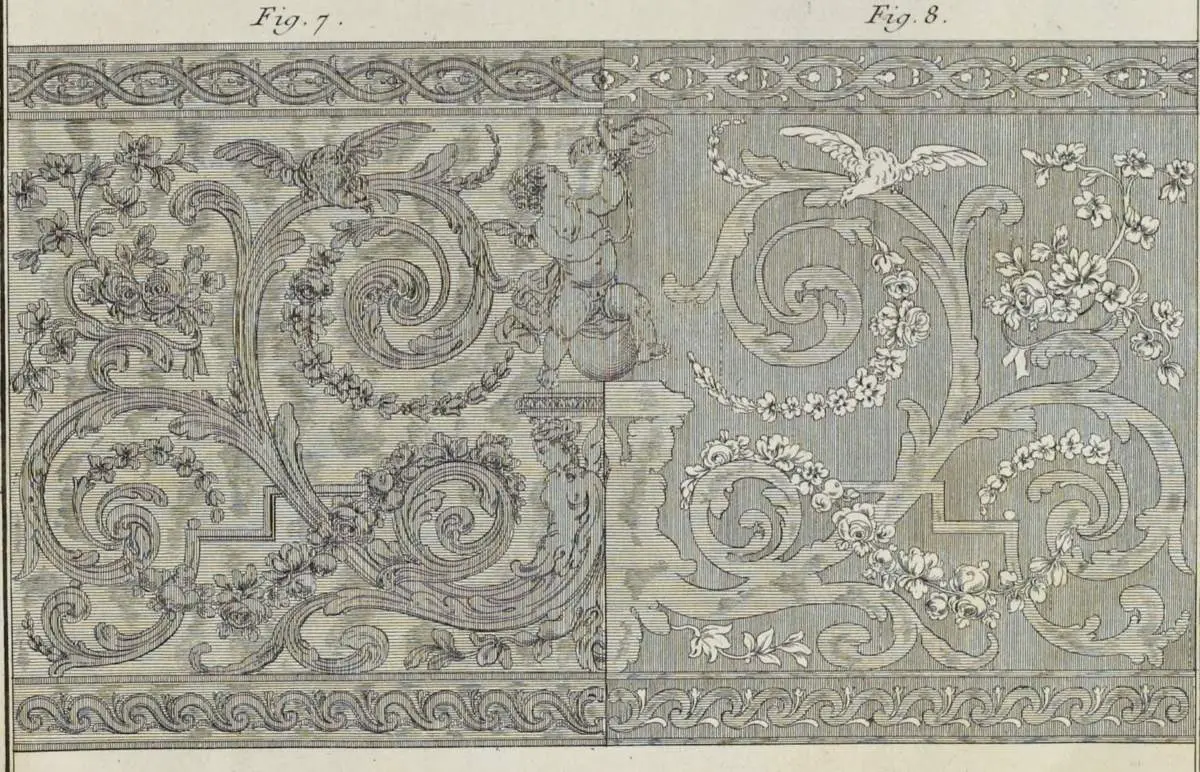
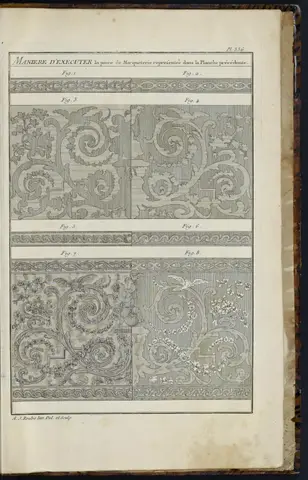
Fig. 7 and Fig. 8 of Pl. 336: a finished partie, engraved, beside its contre-partie, as Roubo describes them on p. 1017.
Collection: Getty Research Institute copy, L'Art du menuisier, part III, section III (1774), Pl. 336, scanned for the Internet Archive
Detail. The small picture marks where it sits in the whole object.
“Maniere d'executer la piece de marqueterie, Pl. 336 of L'Art du menuisier (Roubo), Fig. 7 and 8”, André-Jacob Roubo; public domain.
Complete credit
"Maniere d'executer la piece de marqueterie, Pl. 336 of L'Art du menuisier (Roubo), Fig. 7 and 8" by André-Jacob Roubo — https://archive.org/details/gri_33125009321973 — Public domain (US: published in 1774, before 1931; DE/FR: Roubo, who designed, drew and engraved the plate, died in 1791 per the Getty Research Institute library record of the scan, more than 70 years ago); modified: cropped to the detail of Fig. 7 and Fig. 8 with their engraved labels, resized to 1200 px wide, lightly smoothed (Gaussian blur, radius 0.5 px at 1200 px wide) to keep the 640 px web copy within 60 KB
Sources and reading levels
- André-Jacob Roubo, L'Art du menuisier, part III: section II (chapter VIII, on tables) and section III, L'Art du menuisier ébéniste (Paris, 1769–1774: the library record dates the work 1769; section III was approved by the Académie royale des sciences on 5 March 1774 and printed by L. F. Delatour in 1774; no year for section II appears on the pages read); Getty Research Institute copy, one bound volume; public domain in the US and EU (Roubo died 1791) archive.org/details/gri_33125009321973Read: scanned page
- Cleveland Museum of Art, Cabinet, c. 1690, André-Charles Boulle (French, 1642–1732), ebony, marquetry in metal and tortoise shell, accession number 1949.539, collection online record (CC0) www.clevelandart.org/art/1949.539Read: full textText licence: CC0 1.0 (terms)
- Thomas Chippendale, The Gentleman and Cabinet-Maker's Director (London: printed for the author, 1754); Smithsonian Libraries copy, scanned for the Internet Archive; public domain in the US and EU (Chippendale died 1779) archive.org/details/gentlemancabine00ChipRead: scanned page
- Musée du Louvre, collections notice 'Vénus de Milo', LL 299; N 527; Ma 399, Département des Antiquités grecques, étrusques et romaines (last updated 17 April 2026); quotations in French, with the English translated here collections.louvre.fr/ark:/53355/cl010277627Read: full textText licence: Licence Ouverte / Open Licence 2.0 (Etalab) (terms)
More objects in Furniture
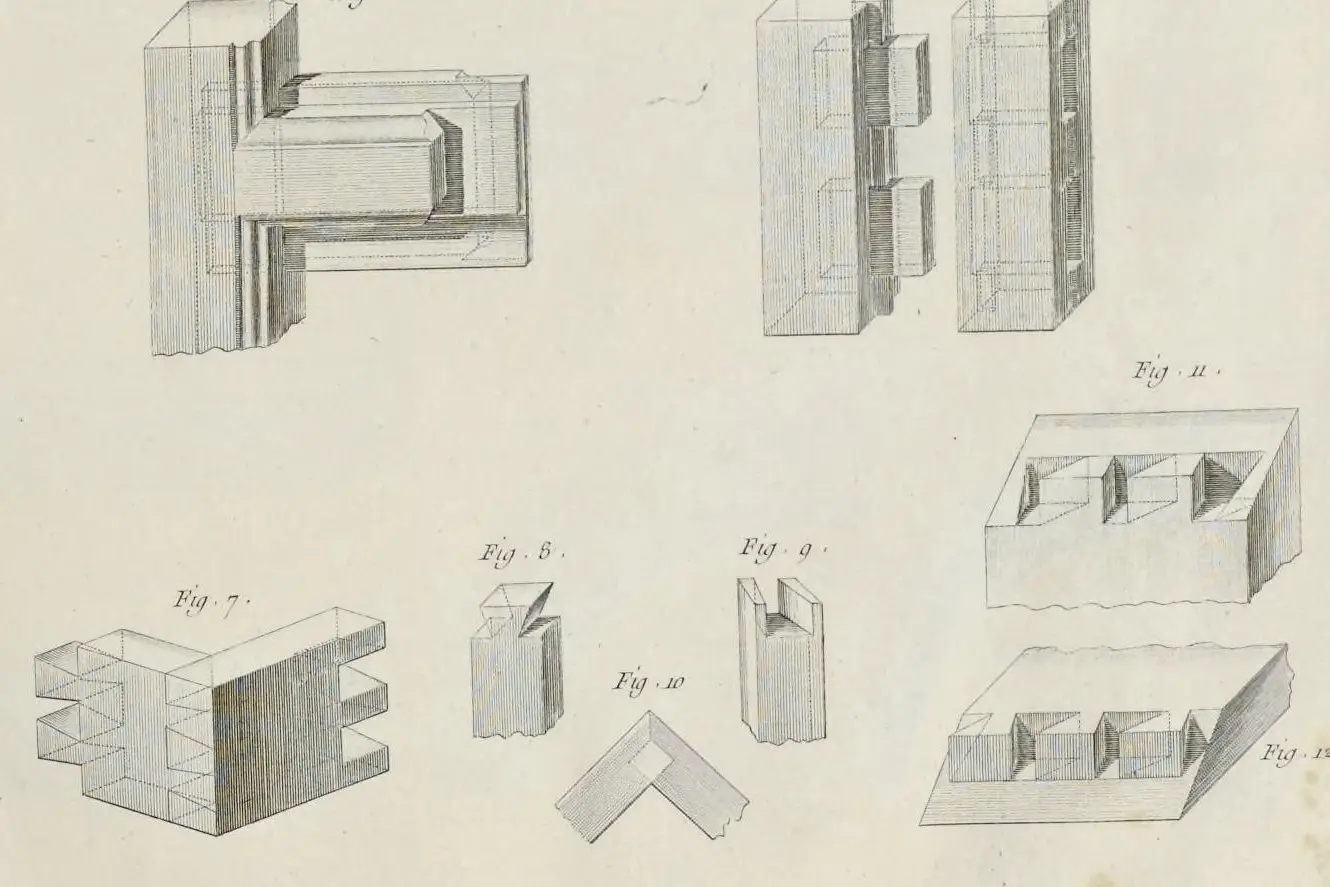
Technique, diagrammed
Dovetail Joint: How Roubo Placed the Tails in a Drawer
Catalogued
Picture credit
"Assemblages doubles et à queues d'aronde, Pl. 9 of L'Art du menuisier (Roubo), detail" by André-Jacob Roubo and Berthault — https://archive.org/details/gri_33125009321916 — Public domain (US: published in 1769, before 1931; DE/FR: Roubo, who drew the plate, died in 1791 per the Getty Research Institute library record of the scan, more than 70 years ago; the engraving, published in 1769, is signed 'Berthault Sculp.' with no first name: the Internet Archive's library records name two engravers of that name working then, Nicolas Berthault, d. 1785, and Pierre Gabriel Berthault, 1748-1819 (archive.org search of creator Berthault, read 2026-11-27, rights-research/evidence/ia/search-berthault.json), so whichever of them engraved it died more than 70 years ago); modified: cropped to a 3:2 frame around Fig. 7 to 12 and the lower halves of Fig. 5 and 6
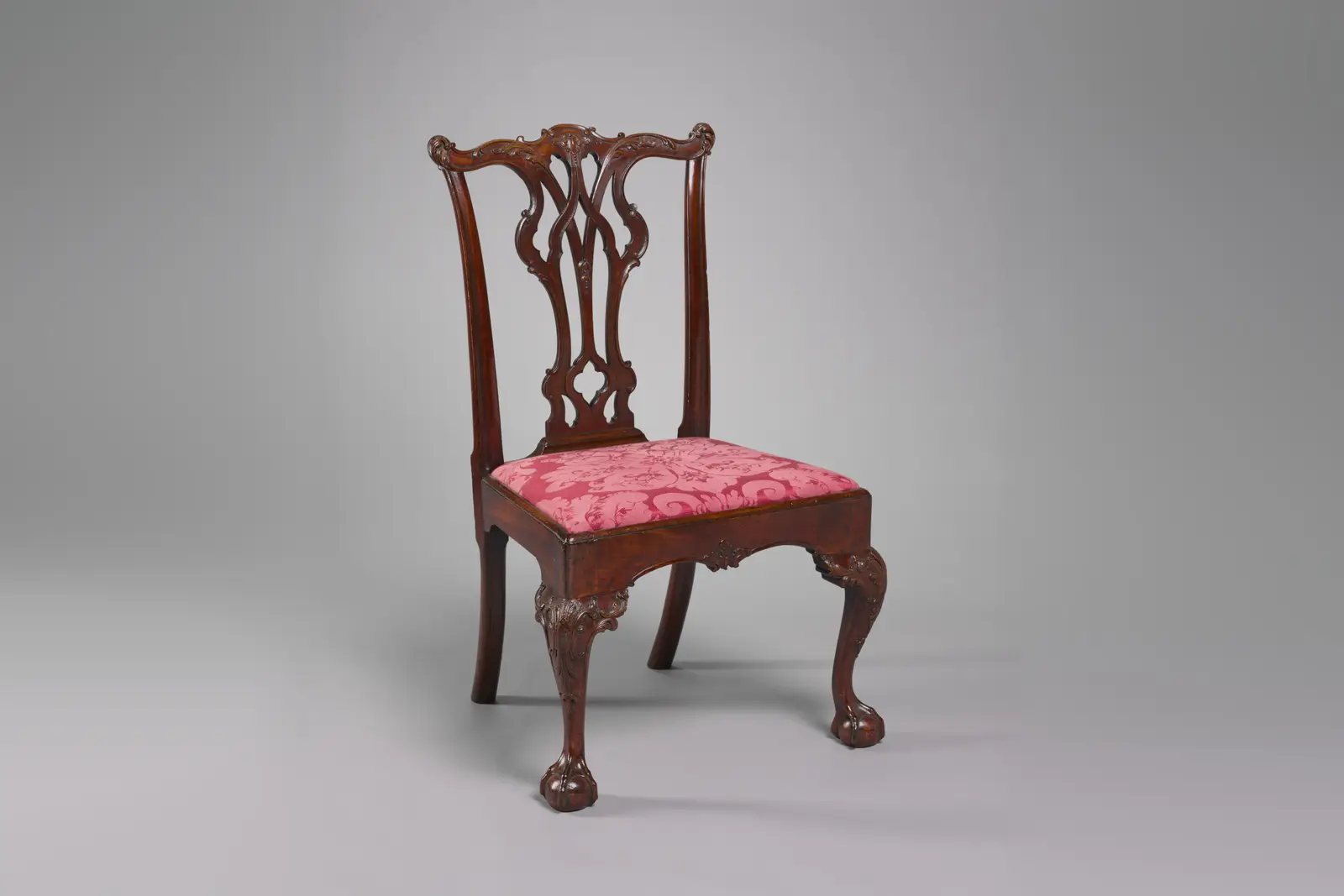
Telling them apart
Chippendale Style: Thomas Chippendale's 1754 Director
Catalogued
Picture credit
"Side Chair, Philadelphia (card)" by Cleveland Museum of Art — https://www.clevelandart.org/art/1985.58 — CC0 1.0 (https://creativecommons.org/publicdomain/zero/1.0/); modified: padded with the photograph's own background to a 3:2 frame, left and right, with a feathered seam
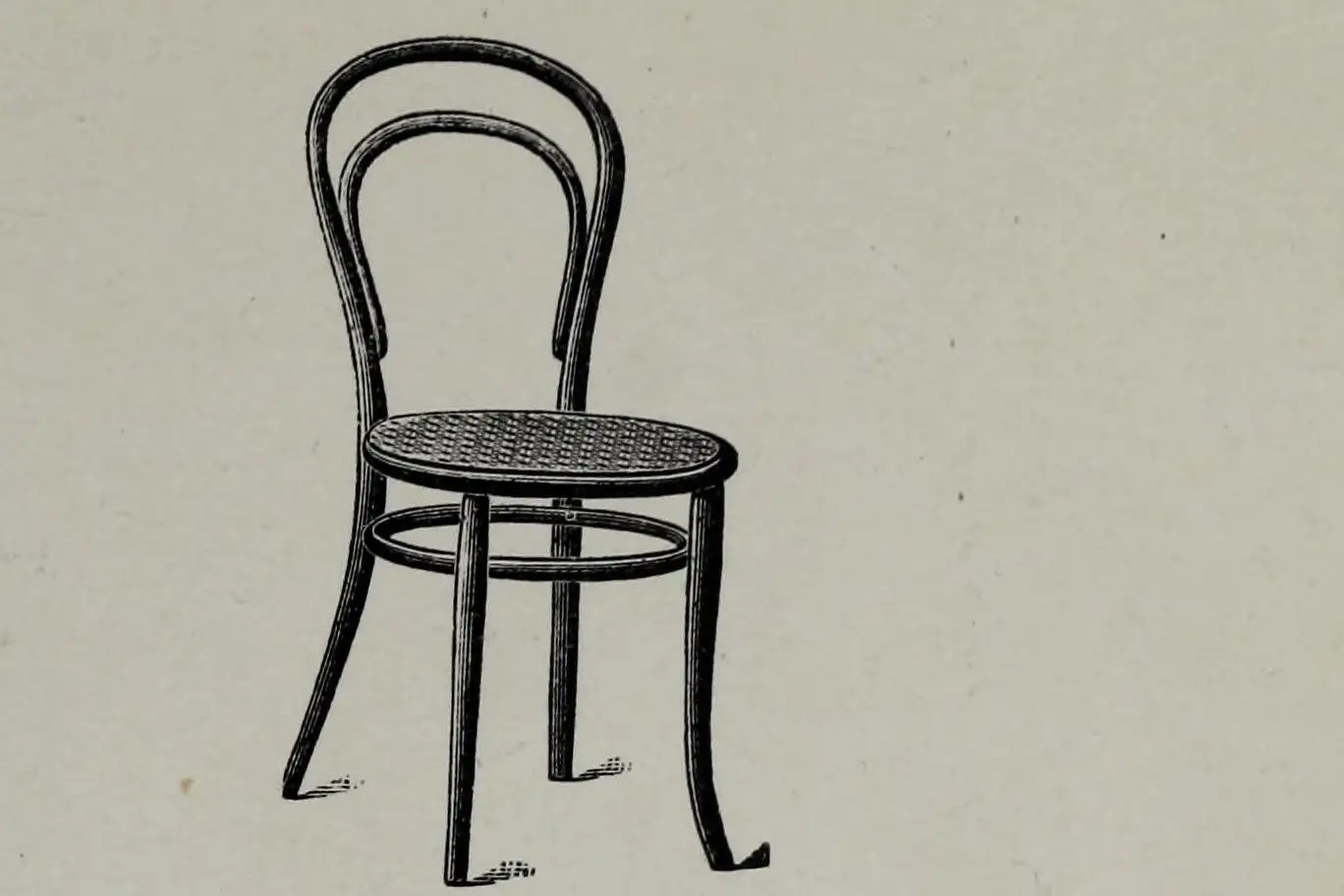
Technique, diagrammed
Thonet No. 14: Bent, Not Carved, per Heller
Catalogued
Picture credit
"Sessel Nr. 14, plate in Michael Thonet (Heller, ed.), detail" by Unknown author — https://archive.org/details/michaelthonetder00hell — Public domain (US: published in [1920] (year from the library record; the title page gives Brünn and no year), before 1931; DE/FR: unsigned catalogue cut, an anonymous work published in [1920] (Brünn, per the title page), so 70 years from publication have passed); modified: cropped to a 3:2 frame around the chair Sessel Nr. 14, caption excluded
Cite this page
Kiln, Easel & Anvil. “Boulle Marquetry: Two Panels From One Cut, per Roubo.” Published 28 November 2026. https://kilneaselandanvil.com/furniture/boulle-marquetry/ (accessed on the day you read it).
How a record is checked Every correction, dated Report an error on this page (contact@kilneaselandanvil.com)